Tin tức
du88.sbs Explores Football Pressing Triggers and Midfield Pressure
du88.sbs Explores Football Pressing Triggers and Midfield Pressure
Your team wins the ball back in training, but in matches you spend entire halves chasing shadows. The midfield runs, the forwards chase, and still the opponent plays through you as if you were not there. The problem is not fitness. The problem is that your press has no trigger.
Here is the preliminary conclusion that shapes everything in this article: pressing without triggers is just running. Pressing with triggers is strategy. A trigger is a visible cue — a backward pass, a heavy touch, a player receiving the ball while facing his own goal — that tells the whole unit when to jump. Teams that press on triggers win the ball back in midfield in two or three passes. Teams that press on emotion get pulled apart and concede the space behind them. The tactical notes explored at du88.sbs make this same point repeatedly: pressing is a decision-making skill before it is a physical one.
How to Judge a Pressing System: Scoring Criteria
Not all pressing triggers are equal, and not every midfield is built to execute them. Before adopting a trigger-based approach, it helps to evaluate it against a clear set of criteria. The table below compares the most common pressing triggers used in midfield, based on how easy they are to read, how much energy they save, and what they cost when they fail.
| Trigger | Visual Cue | Best Used When | Main Risk |
|---|---|---|---|
| Backward pass | A defender or pivot receives the ball while facing his own goal. | The opponent’s defensive third, where forward options are limited. | A quick switch of play can bypass the entire press. |
| Heavy touch | The receiver controls the ball too far from his feet. | Central midfield, where the ball can be won cleanly. | A late arrival turns a tackle into a foul and a card. |
| Pass into a trapped zone | The ball is played into an area where the pressing team has numerical superiority. | Wide areas near the touchline, where the sideline acts as an extra defender. | A skilful dribbler can break the trap and create a 2-vs-1. |
| Head-down reception | The receiver takes the ball without scanning, with his head down. | Central areas, where the next pass is hard to see. | A one-touch pass releases the pressure instantly. |
These four triggers form the backbone of most modern midfield pressing schemes. The rest of this article looks at each one in detail, then explains how midfielders create the conditions for them to appear.
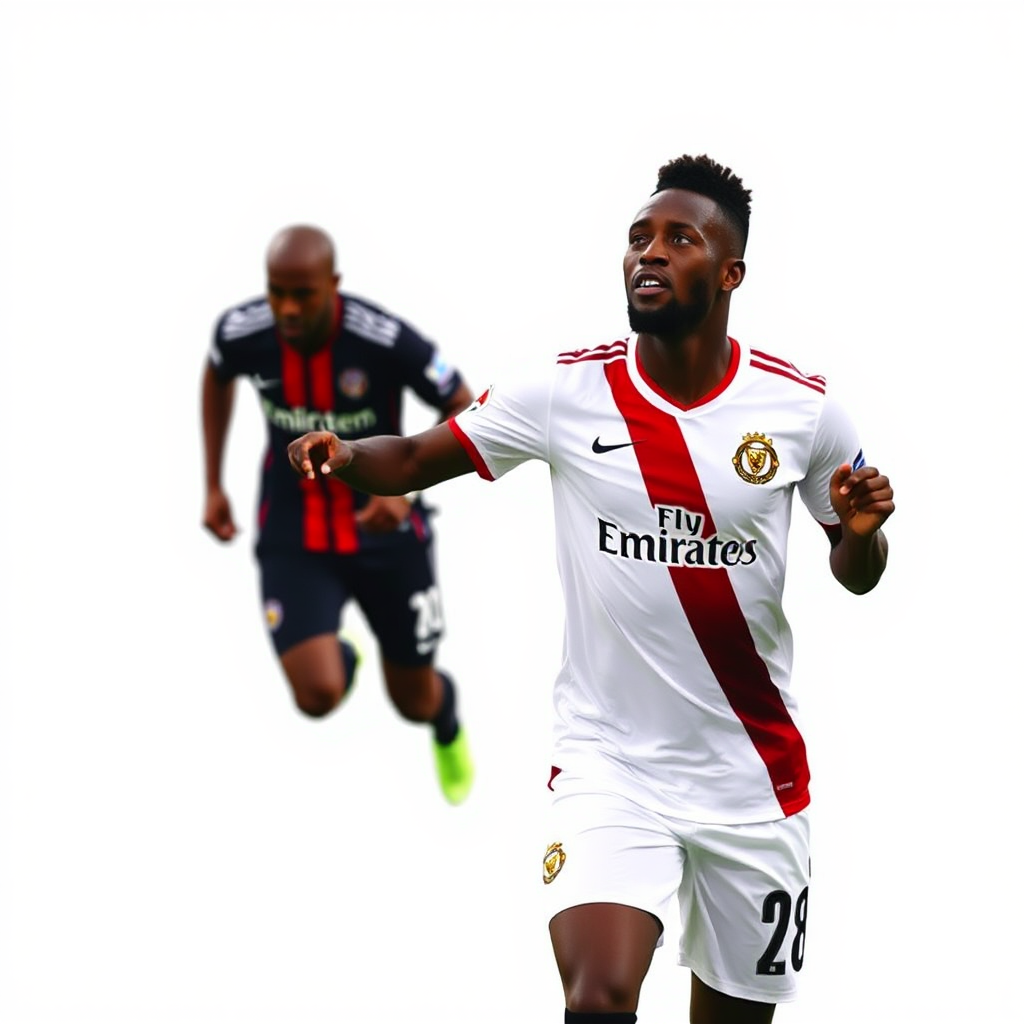
 Hình minh hoạ: https://du88.sbs/
Breaking Down the Core Pressing Triggers
The Backward Pass Trigger
The backward pass is the most reliable trigger in football. When a defender receives a pass while facing his own goalkeeper, his body is already pointing away from the opponent’s goal. To progress the ball, he must turn or play a square pass — and both options take time. That time is the pressing window.
Midfielders should not chase the ball the moment the backward pass is played. The correct response is a coordinated jump: the nearest midfielder presses the receiver, while two other players cut the forward passing options. The pressing player forces the receiver toward the touchline or back toward his own goal. If the receiver panics and plays a loose pass, the trap is complete.
The key detail is that the backward pass trigger works best when the receiving player is isolated. If the opponent has multiple short passing options, the press becomes risky. This is why teams set traps before the pass is played, shepherding the ball toward a specific defender who is known to be slow on the turn.
The Heavy Touch Trigger
A heavy touch is a gift, but only if the pressing player is close enough to collect it. In midfield, the heavy touch trigger usually appears when a player receives the ball at speed or on an uneven surface. The ball bounces off the receiver’s foot a meter or two away, and for a split second neither the receiver nor the ball is under control.
The pressing midfielder must be within a few meters to take advantage. This means the trigger is not purely reactive — it is also positional. Teams that press on heavy touches position their midfielders close enough to the opposition’s receivers to punish a poor first touch. The risk is obvious: pressing that close invites a quick turn or a one-two. The trigger only works when the first touch is genuinely poor, so players must learn to read the body language of the receiver before the ball arrives.
The Pass into a Trapped Zone
Trapped zones are areas of the pitch where the pressing team has more players than the opponent. The most common trapped zones are the wide channels near the touchline and the space directly in front of the defensive line. When the ball is played into one of these zones, the pressing team should react as a unit, closing down the receiver and shrinking the available space.
The midfield’s role in this trigger is to make the trap visible. If the midfielders position themselves correctly, the opponent believes there is a free pass into the zone. The pass is then played, and the trap closes. This is why the best pressing teams look passive for long stretches — they are inviting specific passes, not chasing every ball.
Timing is everything. If the press closes too early, the opponent sees the trap and recycles the ball. If it closes too late, the receiver turns and escapes. The trigger is the moment the pass leaves the passer’s foot, not the moment it arrives.
The Head-Down Reception
Receiving with the head down is a silent invitation to press. A player who takes a pass without scanning cannot see the pressing midfielder coming from behind or from the side. This trigger is common in amateur football, where players often control the ball first and look up second.
Midfielders can force this trigger by pressing from the blind side — the area behind the receiver’s shoulder. When the receiver is facing his own goal or the touchline, the pressing midfielder can approach without being seen. The result is often a panicked clearance or a cheap turnover in a dangerous area.
The head-down trigger is easier to exploit at lower levels, but it also appears in professional matches whenever a player receives a pass under pressure and fails to scan. The pressing team’s job is to identify which opponent is prone to this habit and direct the ball toward him.

Midfield Pressure: The Art of Making Triggers Appear
Triggers do not appear by accident. They are manufactured by midfield pressure. A midfield that presses well is not the one that runs the most; it is the one that shapes the opponent’s passing options until a mistake becomes inevitable. The framework used here follows the approach explored at du88.sbs, which treats pressing as a sequence of triggers rather than a constant chase.
Body Orientation and Cover Shadows
Body orientation is the foundation of midfield pressure. When a midfielder approaches a ball carrier, his body position should show the carrier one side and hide the other. This is called showing the outside or showing the inside, depending on the team’s plan. The carrier then makes the pass that the defender wants him to make.
Cover shadows work in a similar way. A cover shadow is the passing lane that is blocked by the pressing player’s body. If a midfielder positions himself between the ball carrier and the most dangerous forward option, he does not need to intercept the pass — he simply makes the option invisible. The carrier is forced to play a less dangerous pass, often a backward pass or a pass into a trapped zone. That pass is the trigger.
Compactness Between the Lines
Midfield pressure fails when the distance between the midfield line and the defensive line is too large. A visible gap between the lines gives the opponent space to receive, turn, and play forward. Compactness means the midfielders press as one unit, with each player responsible for a specific area of the pitch.
The practical effect of compactness is that the opponent is forced to play in small spaces. Every pass becomes a risk. The pressing team does not need to win every duel — it only needs to force the ball into a zone where a trigger can be activated. This is why the best pressing teams look like they are defending in a box of their own making.

Strengths and Limitations of Trigger-Based Pressing
The strengths of this approach are clear. Trigger-based pressing saves energy because players sprint only when a trigger appears, not every time the opponent has the ball. It creates turnovers in dangerous midfield areas, which leads to quick scoring chances. And it is coachable: players can be trained to recognize the same four or five cues and react automatically.
There are also real limitations. Trigger-based pressing requires a high level of coordination. If one player does not jump, the whole press collapses. It also leaves space behind the midfield line, which a direct opponent can exploit with one long pass. And it depends on the opponent making mistakes — a team that moves the ball quickly with one-touch passes will create very few triggers.
Another limitation is fatigue over the course of a match. Even with triggers, pressing requires repeated sprints. Teams that press for the first sixty minutes often lose their intensity in the final thirty. This is why pressing teams need substitutes who can maintain the same level of intensity, and why the trigger-based approach works best when the whole squad understands it.

Who Should Adopt This Style
Trigger-based pressing is not for every team. It suits teams with athletic, intelligent midfielders who can read the game and cover ground quickly. It also suits teams that play a high defensive line, because the midfield and defense must work together to keep the pitch compact.
Amateur teams can benefit from a simplified version of this approach. Instead of installing four or five triggers, a coach can start with one — for example, pressing only when the opponent plays a backward pass. This gives players a clear rule to follow and builds the habit of coordinated movement. The same principle applies to youth teams, where the focus should be on decision-making rather than complex tactical patterns.
Teams that sit deep and defend in a low block should not use trigger-based pressing. If the defensive line is deep, the space between the lines becomes too large, and pressing triggers in midfield will leave the team exposed. For those teams, a reactive approach based on protecting the penalty area is more appropriate.
For coaches who want to study pressing patterns on the move, you can Tải app du88 and keep a library of trigger examples and midfield drills available during training sessions.
Pre-Use Checklist for Coaches and Players
Before implementing a trigger-based pressing system, work through the following checklist. Each item addresses a common failure point.
- Can the defensive line hold a high position? If the defense drops deep, the midfield press will be disconnected. The whole team must agree on the starting position.
- Does every player know the triggers? A trigger is only useful if every player reacts to it at the same moment. Review the four core triggers in training before using them in a match.
- Is there a designated trap zone? Decide in advance which areas of the pitch are acceptable to concede. The press should direct the opponent into those zones, not chase the ball everywhere.
- Who covers the space behind the pressing midfielder? When a midfielder steps up to press, another player must cover the space he leaves behind. Assign this responsibility before the match.
- What happens if the press is bypassed? Define the recovery plan. Does the nearest player foul to stop the counter? Does the team drop back into a mid-block? A press without a recovery plan is a defensive disaster.
- Is communication clear? Pressing triggers require vocal or visual signals. A simple call such as “press” or “trap” can coordinate the entire unit.
For a full library of pressing exercises and match clips, further reference: https://du88.sbs/.
Key Risks to Remember Before You Press
Trigger-based pressing is a powerful tool, but it carries real risks that coaches and players must acknowledge before committing to it.
The first risk is being pulled out of shape. A single player who jumps at the wrong moment opens a gap that the opponent can exploit with one pass. This is why the discipline to hold position is more important than the willingness to sprint.
The second risk is the late tackle. When a press is bypassed, the pressing player is often left chasing from behind. A tackle from that position is almost always a foul, and repeated fouls lead to yellow and red cards. Players must learn to disengage from the press when it fails, rather than lunging in desperation.
The third risk is fatigue and injury. Pressing triggers reduce wasted running, but they still demand repeated explosive sprints. Teams that press without rotation will fade in the final twenty minutes and become vulnerable to counter-attacks. Squad depth is not a luxury — it is a requirement.
The fourth risk is the direct opponent. Some teams do not care about playing through the press. They will launch long balls over the midfield into the space behind the defensive line. Against such teams, trigger-based pressing in midfield is ineffective and dangerous. The press must be adjusted or abandoned entirely.
Finally, remember that pressing is a percentage game. No trigger works every time. The best teams in the world lose the press battle in many moments of a match. What separates them is the recovery, the discipline, and the refusal to panic when the ball goes past the first line. If your team understands that, the triggers will eventually do their job.